A business website has a straightforward job: explain what the company offers, show visitors whether the service fits their needs, and make the next step easy. That job becomes harder when important services are buried in the navigation, mobile pages take too long to load, or a contact form asks for information the business does not need. Visual polish cannot fix those problems on its own. Good Texas web design combines useful content, practical user paths, dependable development, search fundamentals, and clear conversion points. The site should help someone complete a real task, whether that means sending a qualified enquiry or buying a product.
WebEscalate designs and develops websites for companies that serve customers in Texas. Work begins with the existing site, the people the business wants to reach, and the action those visitors should take. Those details determine which changes belong in the project. Depending on the requirements, the work may involve a new business site, a redesign, an ecommerce store, a service-area website, or targeted improvements to an existing platform.
Texas Web Design Based on How Customers Make Decisions
Visitors usually need several questions answered before they contact a company. Someone looking for a home service may check the service area, availability, licensing details, and how to request an estimate. A B2B buyer may look for detailed service information, technical capabilities, relevant project evidence, and an explanation of the consultation process. An ecommerce shopper needs accurate product information, predictable navigation, and a checkout that works on a phone. Mapping these paths before designing the pages gives each page a specific purpose.
The location structure also depends on how the company operates. A business serving one area of Dallas-Fort Worth needs a different setup from a statewide provider covering Houston, Austin, San Antonio, and smaller communities. The website should describe the actual service area and give useful information about locations that matter to customers. Publishing dozens of nearly identical city pages adds little value and can leave several pages competing for the same search. A smaller set of accurate, distinct pages is easier to understand and maintain.
Texas Web Design Services for Business Sites and Online Stores
The services included in a project should reflect the way the website supports the business. A lead-generation site may need focused service pages and dependable enquiry forms. Another company may need ecommerce, bookings, customer accounts, payments, CRM connections, or other operational tools. WebEscalate’s website development services connect the page plan to the technical build, so the content and features follow the same requirements. A project may include:
- Custom business websites: page architecture, responsive layouts, reusable sections, enquiry forms, analytics, and CMS controls.
- Website redesigns: a review of the current content, navigation, templates, performance, forms, and search-sensitive URLs before rebuilding.
- Ecommerce development: product and collection structure, store navigation, payments, shipping requirements, tracking, and tools for ongoing management.
- WordPress development: editable templates, custom functions, plugin integrations, content migration, and a maintenance plan.
- Shopify development: storefront design, theme changes, store setup, app integrations, and custom workflows. The Shopify development page explains this service in more detail.
- Ongoing website work: landing pages, technical repairs, content updates, performance improvements, and post-launch maintenance.
The proposal should list the pages, templates, functions, integrations, review stages, and post-launch responsibilities covered by the quote. Both sides then have a written definition of what will be delivered. This also makes it harder for missing content or unfinished technical work to hide behind an attractive interface.
Responsive Web Design for Customers Using Mobile Devices
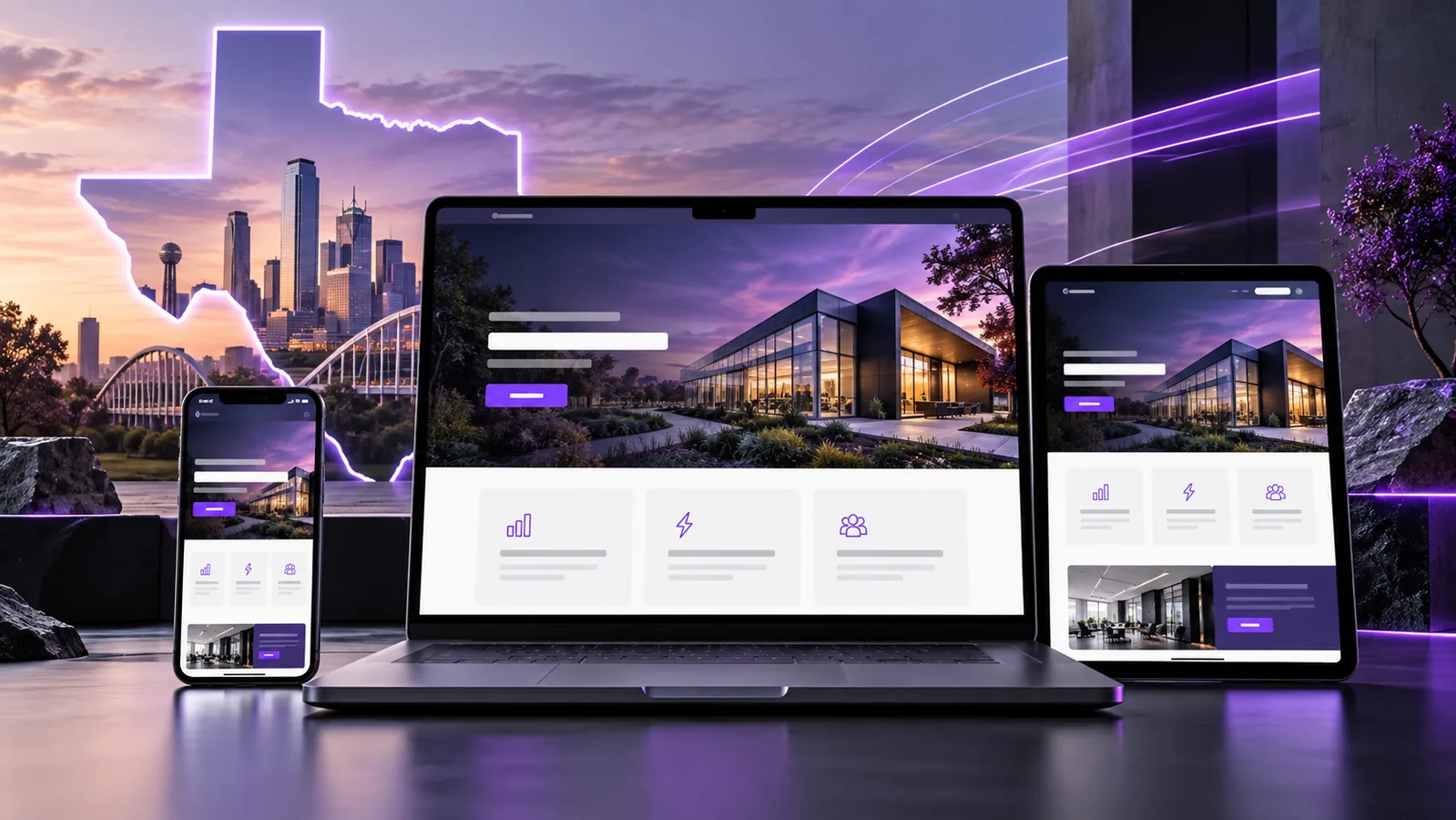
A Texas customer may first open a website while travelling, working at a job site, or comparing providers on a phone. Navigation, forms, telephone links, product details, and service information all need to work at that size. Designers must decide which content appears first and make controls comfortable to tap. Developers need to manage images, fonts, scripts, and third-party tools that could slow the page. Simply shrinking the desktop layout rarely produces a good mobile experience.
Performance should be measured during and after development. Google uses Largest Contentful Paint, Interaction to Next Paint, and Cumulative Layout Shift to assess loading, responsiveness, and visual stability through Core Web Vitals. Its Core Web Vitals guidance recommends providing a good experience, though results vary between devices and network conditions. Development tests can reveal problems before launch, while field data shows what real visitors experience afterward. No agency can promise the same score in every environment.
Content and SEO Foundations for Website Design in Texas
Search planning should start alongside the website design. Each main service needs its own useful page with one recognizable search intent. Titles, headings, internal links, image descriptions, and navigation show how those pages relate to one another. When a project includes keyword research, content work, or technical search changes, WebEscalate can combine the build with its search engine optimization services.
A redesign must account for URLs that already exist. If a useful page moves without an appropriate redirect, visitors may follow broken links and search engines may struggle to find the replacement. Google recommends mapping old URLs to relevant new ones, using permanent server-side redirects where possible, updating internal links, reviewing canonical and robots settings, and submitting a current sitemap. Its site migration documentation notes that visibility can fluctuate while Google recrawls changed URLs. Recording this work in the redesign checklist makes any launch issue easier to investigate.
A Practical Texas Website Design Process
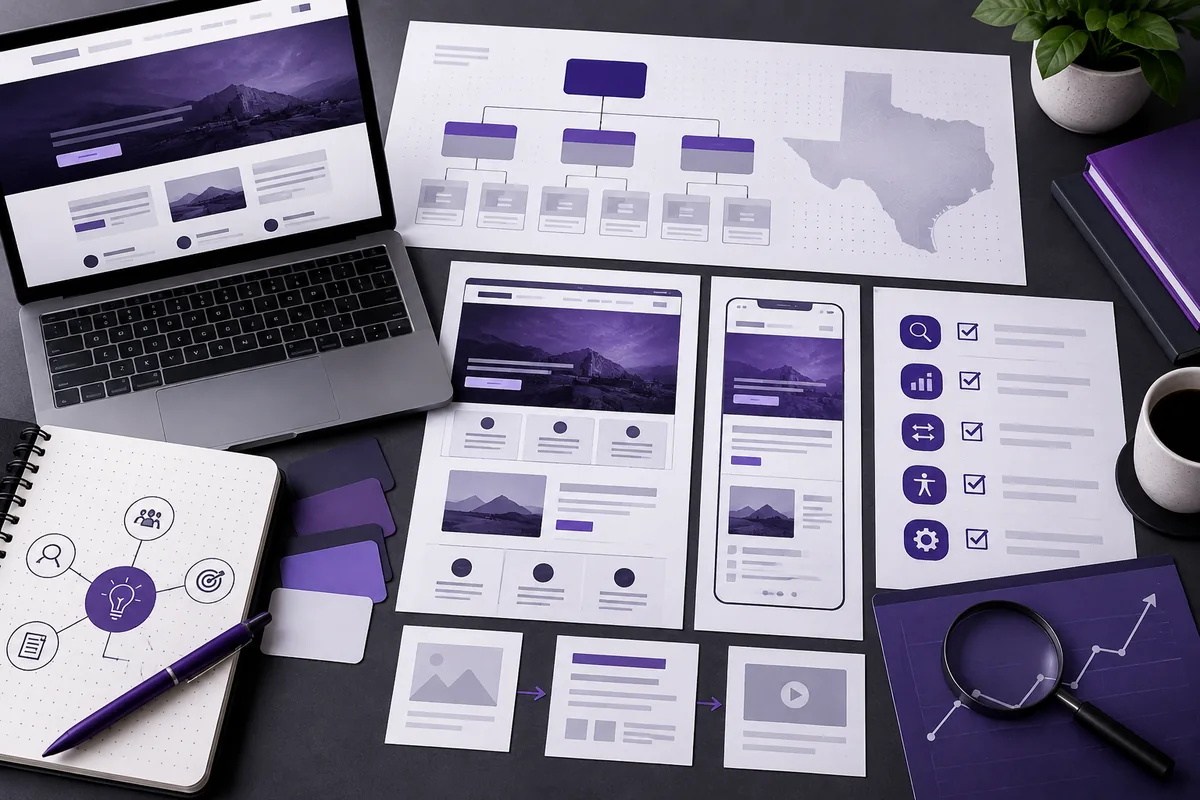
A request for a “better website” is too broad to build from. The project first needs to establish what the site must do, which existing content is useful, and what needs to change. Each stage should end with something the client can review before work moves forward. This gives design preferences a business context and catches disagreements before they become expensive revisions.
- Discovery: document the audience, services, locations, business goals, required features, current problems, and the action each priority page should support.
- Current-site review: examine useful content, search performance, important URLs, forms, navigation, mobile behaviour, analytics, and technical constraints.
- Sitemap and content plan: choose which pages to retain, improve, combine, create, or remove, then give each page one main purpose and keyword intent.
- Wireframes and visual design: agree on content order, user paths, calls to action, components, typography, colour, and responsive behaviour.
- Development and integrations: build the approved templates, CMS controls, forms, ecommerce features, tracking, and required connections.
- Content migration and QA: move approved content, test forms and links, check priority devices and browsers, review accessibility basics, and verify the SEO migration work.
- Launch and monitoring: test live forms, analytics, redirects, uptime, indexing signals, and field performance once visitors begin using the site.
The sequence may be shorter for a small website and more involved for a large store. In either case, the client should know when feedback is required, who makes each decision, and which delays could affect the launch date.
Accessibility and Website Ownership
Accessibility decisions affect content, design, and development. A sensible baseline includes an orderly heading structure, readable contrast, useful alternative text, labelled form fields, keyboard access, visible focus states, and error messages that explain how to correct a problem. The W3C Web Accessibility Initiative explains how web content, browsers, assistive technology, and authoring tools work together. The project should name the accessibility standard and testing included in the scope. A broad compliance claim requires evidence from an appropriate audit.
Ownership and maintenance should be settled before development. The proposal needs to state who controls the domain, hosting account, website account, source files, licensed assets, analytics, and third-party subscriptions. It should also explain how the team will handle backups, security updates, content edits, and support requests after launch. These details affect the long-term cost of operating the site and help a Texas business compare proposals beyond the initial design.
How to Evaluate a Texas Web Design Company
Every deliverable in a proposal should correspond to a business or user requirement. Ask whether the provider reviewed the current website, how existing search traffic will be protected, what the client must supply, and how the team will test mobile layouts, forms, performance, and accessibility. Examples are most useful when they match the type of work under consideration. A screenshot alone says little about the original problem, the work completed, or the method used to measure the result.
Review the process for communication and scope changes as well. The contract should specify review rounds, responsibility for content, technical exclusions, launch support, and how additional work will be estimated. A lower quote may omit templates, integrations, or migration work. A higher quote can still be incomplete. Comparing the written deliverables shows whether the proposals cover the same job.
What Affects Web Design Cost and Timeline in Texas?
Location alone does not determine the price of a website. Estimates change with the number of unique templates, the condition of the content, ecommerce requirements, integrations, custom functions, migration volume, accessibility testing, SEO work, and review rounds. A small site with a complex booking or account system may take more work than a larger informational site built from a few reusable layouts. The current CMS and the availability of approved brand assets can also affect the schedule.
A dependable estimate comes after discovery. It should set out assumptions, deliverables, exclusions, milestones, and responsibility for each input. WebEscalate does not give every Texas web design project the same price or delivery date because the required work differs from one site to another. Businesses can use the contact page to provide the current website, required functions, target customers, service area, and preferred launch window for review.
Frequently Asked Questions About Texas Web Design
What should a Texas web design service include?
The written scope should cover the agreed pages, templates, mobile behaviour, content responsibilities, forms, integrations, analytics, testing, launch work, and support. For a redesign, it should also explain how content and existing URLs will be migrated. Each task needs an owner, whether that is the agency or the client. This gives the client a concrete list to approve and verify.
Does WebEscalate work with businesses across Texas?
WebEscalate can design and develop websites remotely for companies that serve customers in Texas. During discovery, the business confirms its actual service area and identifies the cities or regions relevant to the content. A statewide page should not suggest that the company has offices across Texas when it does not. Local claims and project examples should appear only when the business can support them.
How much does web design cost in Texas?
The cost depends on the page structure, custom design work, content, ecommerce functions, integrations, migration, SEO requirements, testing, and support. A useful quote follows a review of the current website and the required outcome. Ask each provider to list its assumptions and exclusions. That makes it possible to see whether two quotes cover the same work.
How long does a Texas website project take?
Scope, content readiness, template count, custom functions, integrations, and response time all affect the schedule. The project plan should list its milestones and the material or approval required at each one. Late content or feedback can postpone launch even when development stays on schedule. Discovery provides the information needed to set a realistic timeline.
Can a redesigned website keep its current Google visibility?
A team can preserve useful content and URLs during a redesign, but it cannot guarantee unchanged rankings. The migration plan should inventory current pages, retain useful addresses when practical, map required redirects, update internal links, review indexation settings, and monitor Search Console after launch. Google says visibility may fluctuate while it recrawls changed pages. Careful preparation reduces avoidable migration problems.
Should a Texas business choose WordPress or Shopify?
The answer depends on what the website must manage. WordPress often works well for content-focused service sites and custom publishing needs. Shopify is designed around ecommerce operations and store management. Products, payments, subscriptions, integrations, staff workflows, editing requirements, and maintenance capacity should drive the platform decision.