Social media marketing agency in Indiranagar Bangalore searches often come from consumer brands that need more than a stream of posts. A useful agency setup connects product priorities, channel roles, creative approvals, customer replies, paid distribution, creator permissions and measurement. Without that operating structure, a busy content calendar can still produce inconsistent claims and weak follow-up.
This guide is for consumer brands that genuinely serve customers in Indiranagar, Bengaluru or a wider Indian market. It explains how to brief and compare an agency without assuming WebEscalate has an office in Indiranagar. It also avoids unverified promises about reach, sales, follower growth, pricing or campaign results.
What a social media marketing agency in Indiranagar Bangalore should clarify first
Start with the commercial job behind the content. A food brand may need product discovery and store visits. A beauty brand may need education, creator content and repeat purchases. A local retailer may need dependable offers, directions and customer replies. These jobs can share a calendar, but they need different messages and measures.
Give the agency a written brief covering the product range, priority audience, genuine delivery or service area, approved claims, seasonal dates, stock constraints, customer questions and action expected after a post. Name the people who can approve copy, design, discounts, product facts and legal wording. Approval delays become visible once each decision has an owner.
The broad digital marketing agency in Bangalore page covers the wider acquisition mix. This Indiranagar article has a narrower purpose: helping consumer brands organise social content, paid amplification, creator work and community operations as one controlled programme.
Assign a job to each channel
Choose channels from customer behaviour and the format the team can produce consistently. Instagram may suit visual product education, short demonstrations and creator work. Facebook may support community updates, paid reach and customer messages. LinkedIn may help when a consumer brand also needs distributors, partners or employer visibility. A channel should stay out of the plan when the brand cannot maintain it or its audience is not there.
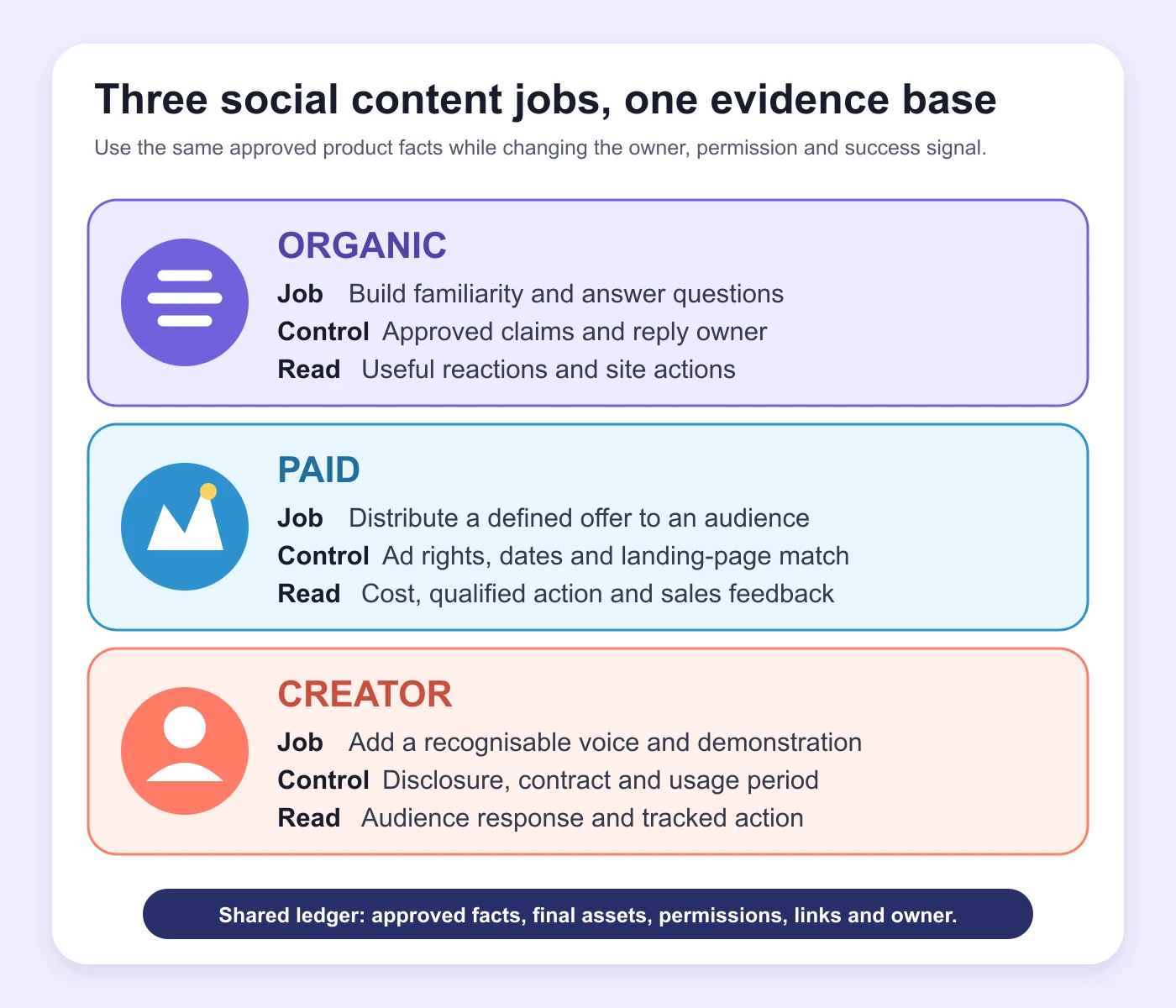
Define the role of organic, paid and creator content separately. Organic posts can build familiarity and answer recurring questions. Paid media can distribute selected messages to defined audiences. Creator content can add a recognisable voice, but the brand still needs approved claims, a disclosure plan, a usage agreement and a review process.
Use one master campaign brief and adapt it to each channel. Copying the same caption and crop everywhere usually ignores format, audience and placement differences. The product facts and offer terms should stay consistent even when the opening line, duration or call to action changes.
Build a content system around customer questions
Group content into a small number of useful themes. Product education can explain ingredients, fit, use or care. Proof can include authorised demonstrations, customer feedback and behind-the-scenes material. Service content can cover availability, delivery, returns or store information. Campaign content can introduce a new product or seasonal offer with clear dates and conditions.
Each theme needs source material. Keep approved product specifications, photography, packaging files, brand terms, offer rules and frequently asked questions in one accessible library. Record when a claim was approved and who owns future updates. This reduces the risk of an old claim appearing in a new post.
A content calendar should show more than a publish date. Add the channel, objective, format, product, audience, copy owner, design owner, approver, disclosure requirement, destination link, usage-rights expiry and community handoff. That makes the calendar an operating record rather than a list of ideas.
Control approvals without slowing every post
Agree on the approval path before production starts. Routine posts based on approved templates may need a brand check. A new product claim, price promotion, health statement, contest or influencer partnership may need additional review. Put these rules in the workflow so the agency knows which items can move quickly and which require specialist approval.
Use version names and one final approval location. Feedback scattered across chat, email and design comments can leave the publisher unsure which version is current. The final record should include the approved copy, creative, destination URL, offer dates and approver.
Plan changes after publication as well. Correct an inaccurate price or product detail promptly, keep evidence of the change and notify the people handling customer replies. For paid campaigns, confirm whether an edit creates a new ad or interrupts learning before making a routine correction.
Set creator permissions and disclosures in writing
Creator work needs a contract that covers the deliverables, review process, disclosure, claim limits, publishing window, payment or product exchange, content ownership, usage period, territories, editing rights and paid amplification. The brand should know whether it can reuse the content on its own pages, website, marketplace listings or advertisements.
The ASCI influencer guidance explains that promotional relationships should be disclosed clearly. Its influencer FAQ says a material connection can include payment, free products, discounts, trips, employment and other benefits, and that disclosures should be upfront and prominent. Brands and creators should review the current guidance for the format they plan to publish.
The wider ASCI Code requires objective advertising claims to be capable of substantiation. Give creators the facts they may use and the statements they should avoid. A creator’s personal style can remain intact without turning an unsupported impression into a product claim.
Plan community management before publishing
Comments and direct messages can include product questions, complaints, delivery problems, spam and sensitive personal information. Define which replies the agency can post, which need brand approval and which must move to a private or secure support channel. Never request payment details, identity documents or health information in a public comment.
Create response templates for common questions, but let the team adjust them to the customer’s message. A rigid copy-and-paste reply can make a valid complaint worse. Give the agency current stock, delivery, returns and support information so it does not guess.
Set an escalation table with issue type, owner, response path and record location. Product safety, legal threats, harassment, account compromise and a sudden volume of similar complaints need a different response from a routine availability question. The brand should retain control of account ownership and emergency access.
Separate content signals from business outcomes
Reach, video views, saves, shares and comments show how content travelled or how people reacted. They do not confirm a sale, qualified enquiry or store visit. Choose a small set of platform signals for creative learning and a separate set of website or business outcomes for commercial review.
Use consistent campaign parameters on links. Google Analytics explains how UTM parameters identify campaign source, medium, campaign and creative. Consistent naming prevents one campaign from appearing as several unrelated rows. Keep a naming sheet and test the final link before publication.
For paid social, Google Analytics can import campaign data from non-Google platforms and combine cost, clicks and impressions with collected events. This still requires matching campaign identifiers and reliable website measurement. Compare reports with orders, qualified enquiries or another business record instead of treating every click as revenue.
Check paid amplification and usage rights together
A strong organic post is not automatically ready for paid distribution. Confirm that the creative, music, footage, product claim, creator agreement and destination page permit advertising use. Record the usage end date so an old permission does not quietly become a permanent asset.
Define the audience and exclusion logic in the campaign brief. The landing page should match the offer shown in the ad, including price, availability and dates. If the advertisement sends people to a generic homepage, the customer may need to search again for the product they just saw.
Use the platform’s ad library and account history to review live creative and changes. Meta’s public Ad Library can help teams inspect active advertising and branded content records. It does not replace the brand’s own approval file, rights ledger or performance reporting.
How to compare social media agency proposals
Ask each agency to respond to the same brief. Compare channel scope, monthly planning, creative production, filming, copywriting, paid media, creator coordination, community management, approvals, reporting, account ownership and support. Check which work is included and which depends on a separate media, production or creator budget.
Request sample deliverables without treating another client’s confidential report as proof. A useful proposal explains the workflow, review rounds, turnaround assumptions, rights handling, escalation path and measurement method. It should also state what the brand must provide, including product samples, facts, offers and approvals.
A suitable social media marketing agency in Indiranagar Bangalore should be able to explain how content moves from a verified brief to publication and customer follow-up. The decision should follow operating fit and evidence, not a guaranteed follower count or a promise of viral reach.
Consumer-brand social media scope checklist
- Priority audience, product, market and commercial action
- Channel role for organic, paid and creator content
- Approved claims, offer rules and product source files
- Content calendar fields, owners and approval levels
- Creator disclosures, contracts and usage-rights expiry
- Community replies, private support and escalation rules
- UTM naming, website events and business outcome review
- Account ownership, access recovery and handover
This checklist gives the brand and agency one shared scope. It also reveals missing approvals, rights or measurement steps before they affect a live campaign.
Frequently asked questions
What should a social media marketing agency handle?
The scope may include planning, copy, design, video, publishing, paid media, creator coordination, community management and reporting. Ask for a written responsibility table because many agencies price production, media spend, creators and moderation separately.
Which social media platform is best for a consumer brand?
The choice depends on the audience, product, buying path and formats the brand can maintain. Start with channels where customers already spend time and where the team can produce useful content, respond consistently and measure a relevant action.
How often should a brand publish?
There is no universal posting frequency. Set a pace that supports the campaign plan and production capacity. A smaller number of accurate, well-supported posts is safer than a high volume that causes repeated ideas, missed approvals or slow customer replies.
Can an agency guarantee followers, reach or sales?
No responsible forecast can guarantee those outcomes. Platform delivery, creative quality, audience response, budget, competition, offer strength, website experience and follow-up all affect results. Ask for test plans and reporting definitions instead of a guaranteed result.
Does WebEscalate have an office in Indiranagar?
This article does not claim a WebEscalate office in Indiranagar. WebEscalate can discuss remote delivery and service coverage for Bengaluru consumer brands. Confirm meeting arrangements, production requirements and support terms before commissioning work.
Prepare the operating brief before requesting a proposal
Bring the product priorities, audience, approved claims, channel accounts, content assets, creator requirements, customer-response process and measurement setup into one brief. An agency can then recommend a realistic scope without inventing facts or hiding important dependencies.
WebEscalate can review that brief and identify the content, paid distribution, approval and measurement work required. Use the contact page to share the current accounts, product category and campaign objective. You can also review the social media marketing service page for the broader service context.