Software development company in CV Raman Nagar Bangalore searches often begin when a team has outgrown a spreadsheet, a shared inbox, or a collection of disconnected tools. The useful question is not simply who can write code. It is whether the provider can turn a real operating process into a tool that staff can use, managers can inspect, and the business can maintain.
This guide focuses on internal portals, business applications, integrations, and workflow tools. It does not claim that WebEscalate has an office in CV Raman Nagar, a local client result, a fixed delivery time, or a guaranteed business outcome. Those details need verified evidence and a reviewed project scope.
What a software development company in CV Raman Nagar Bangalore should clarify first
Start with the work, not a feature list. Choose one operational path and follow it from the first request to the final record. A service request, vendor approval, field update, quotation, onboarding task, or internal review can each expose where people retype information, wait for permission, or lose track of an exception.
Document the people involved, information received, decision rules, existing systems, exceptions, and final source of truth. Ask what staff do when the normal path fails. The exception path is often more revealing than the happy path because it shows where judgment, permissions, and manual recovery are required.
WebEscalate’s broader software development company in Bangalore page covers the city-level capability. This locality page has a narrower role: helping a buyer define an operational tool before comparing a custom software proposal.
Define the record before designing the screen
An operational application needs an agreed record. For a service request, that might include the requester, category, status, assigned owner, due date, supporting files, approvals, and history. For an order or vendor process, the fields will be different. The team should agree which system owns each field and which users may create, view, change, approve, export, or delete it.
Without that work, a polished interface can hide inconsistent data. Two departments may use the same word for different states, or different words for the same state. A developer then has to guess how the workflow should behave. Put the definitions, validation rules, status changes, and ownership decisions in the requirements.
Data migration also belongs in the first scope. Identify the current files and databases, their quality, duplicates, missing values, required history, and retention needs. Agree how a migrated record will be reconciled and who signs it off.
Choose between configuration, integration, and custom development
Custom development is not automatically the best answer. A well-supported product may already cover the common workflow. Configuration makes sense when the process can fit the product without damaging an important business rule. Integration makes sense when reliable systems already own the required data but need a controlled exchange. Custom development becomes more reasonable when the workflow, permissions, decision logic, or user experience is genuinely specific.
Compare the options against the whole operating cost: licences, implementation, data migration, integrations, training, support, upgrades, and the effort needed to leave the platform later. A low initial quote can become expensive if data export, documentation, testing, and ownership are missing.
For processes that can be handled with existing platforms, WebEscalate’s workflow automation service explains the wider discovery and integration path. A proposal should state which parts are configuration, third-party automation, custom code, or manual work.
Design the operational system around ownership boundaries
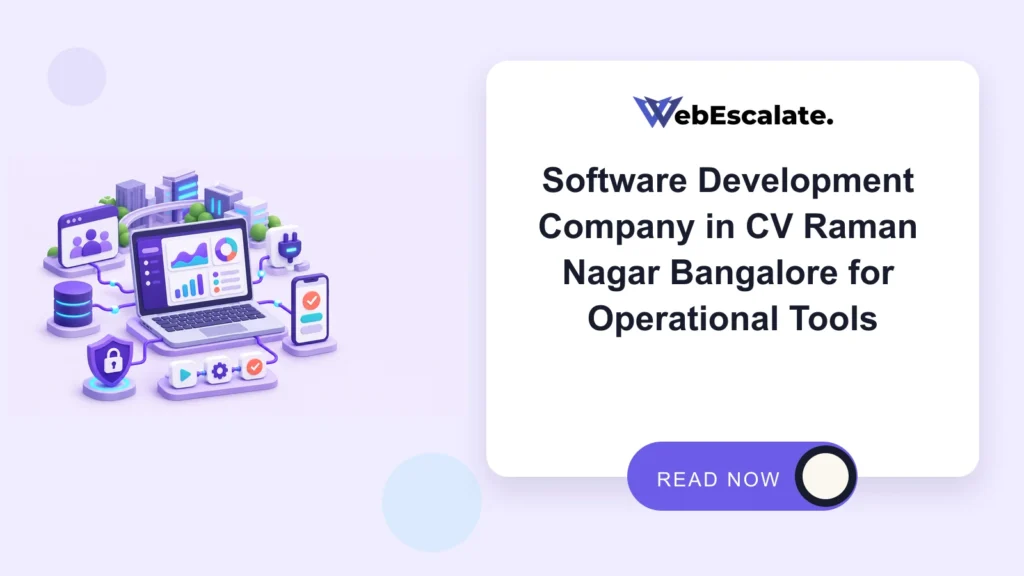
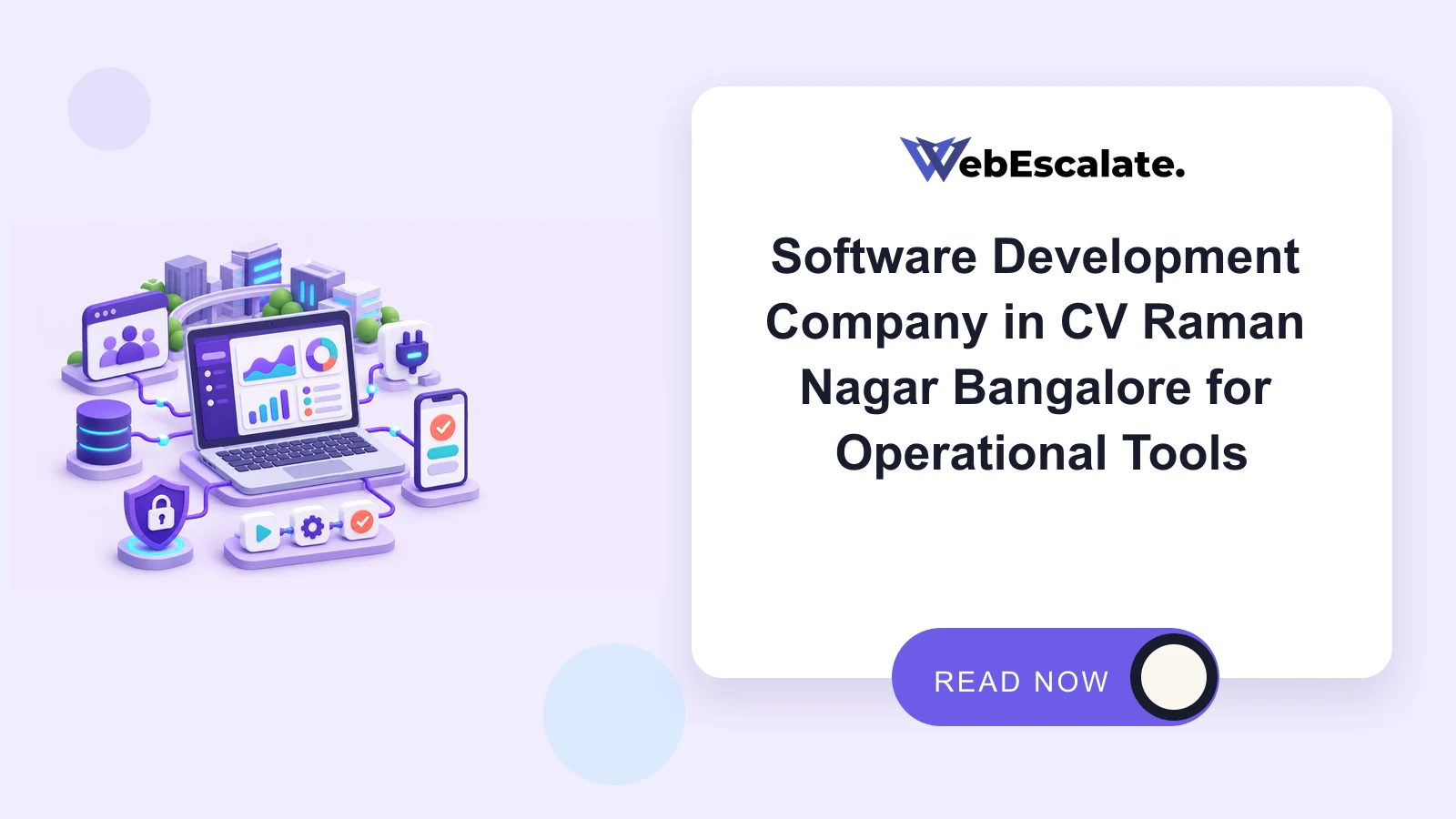
A useful architecture shows where staff act, where the official record lives, how external systems are reached, and where operational evidence is stored. It should also show the boundary where permissions are checked. The diagram below is illustrative. It contains no client system, account data, or performance metric.
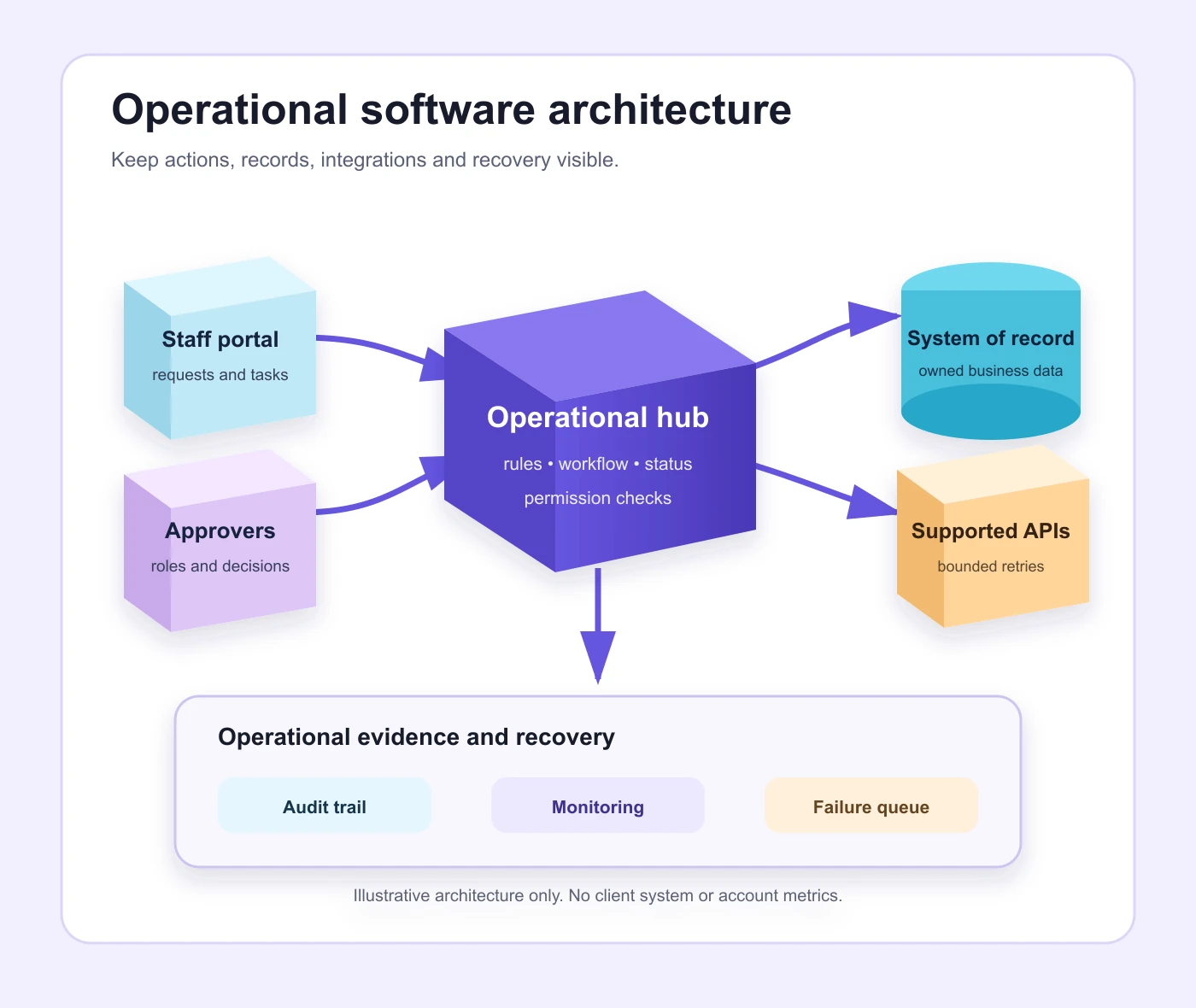
Microsoft’s API implementation guidance recommends validating and authorising a long-running request, recording it durably, exposing its status, and making processing idempotent because the same work can arrive more than once. That is a practical model for operational tools that create records, call external services, or process work in the background.
Ask who owns every connector and what happens when its contract changes. Record timeouts, retry rules, rate limits, duplicate handling, unavailable dependencies, and manual recovery. The user should see a safe status rather than a spinner that eventually disappears.
Specify roles and access before development starts
Write a role matrix that uses business responsibilities rather than vague labels. A requester may create and view only their own records. A coordinator may assign work. An approver may change a decision but not edit the original request. An administrator may manage access without seeing sensitive business data. The exact model depends on the process.
The OWASP Authorization Cheat Sheet recommends a consistent access-control layer, while OWASP logging guidance warns against recording passwords, session identifiers, or other sensitive information. Include authentication, account provisioning, role changes, inactivity, access removal, and privileged actions in the acceptance criteria.
Do not treat an unguessable link as authorisation. Test the system with users from different roles and, where relevant, different customers or business units. Negative tests matter: a user should be unable to view or change a record outside their scope even if they know its identifier.
Build security into the delivery process
NIST’s Secure Software Development Framework describes secure practices that can be added to an existing development life cycle. It also gives software buyers and suppliers a common vocabulary for discussing requirements. A proposal should explain how the team handles code review, dependencies, secrets, testing, deployment permissions, vulnerability response, and changes after release.
Ask where source code, configuration, credentials, build artefacts, and backups are stored. Confirm who owns the repositories and cloud accounts. Development access should be removed when it is no longer needed, and production changes should be attributable to an authorised person or process.
Security scope should match risk. A public information tool, an employee portal, and a system that processes financial or sensitive personal data do not need identical controls. The provider should document assumptions and identify specialist review when the project exceeds its competence.
Plan personal-data handling explicitly
An operational tool may process employee, customer, applicant, vendor, or visitor information. Inventory the personal data, purpose, users, processors, storage locations, transfers, retention, correction process, deletion process, and incident contacts before implementation.
India’s notified Digital Personal Data Protection Rules, 2025 include phased commencement dates. The rules require notices to describe personal data and its purpose in clear language, and they establish requirements that apply on their respective commencement dates. Legal applicability should be reviewed by qualified counsel rather than inferred from a software checklist.
From a design perspective, collect only what the process needs. Avoid putting sensitive values in logs, URLs, analytics tools, test fixtures, screenshots, or support tickets. Use realistic but synthetic data for development and demonstrations unless an approved process requires otherwise.
Make failure handling visible to operations
Every dependency will fail at some point. Network requests time out, credentials expire, files arrive in the wrong format, APIs change, and users submit the same action twice. The design should distinguish a temporary failure from invalid input or a permanent business rejection.
Microsoft’s retry pattern guidance recommends retrying only faults that are likely to be transient and using limits and delays. Endless or layered retries can increase load and hide the original problem. For each important action, define the timeout, safe retry behaviour, duplicate protection, failure state, alert, owner, and recovery step.
Provide an operations view for failed or delayed work. It should show a safe reference, current state, last attempt, reason category, and permitted action. Staff should not need database access to discover whether a customer request was processed.
Use audit trails that answer practical questions
An audit trail should help an authorised person answer who changed what, when, from which workflow step, and with what result. OWASP’s logging and monitoring guidance recommends protecting log integrity, restricting access, using consistent timestamps, and recording enough context for investigation while excluding secrets.
Separate business history from technical logs. A supervisor may need to see that an approval changed from pending to accepted. An engineer may need a correlation identifier and an exception category. Neither view should expose unnecessary personal or secret data.
Agree retention, export, search, and deletion requirements. If logs are important for security or compliance, they need protection from unauthorised alteration and access. A log that nobody reviews is not a monitoring process.
Write acceptance criteria around real tasks
Acceptance testing should use representative tasks and failure cases. Ask users to create, find, update, approve, reject, reassign, export, and recover a record. Test permissions, validation, duplicate submissions, attachments, notifications, integrations, time zones, accessibility, browser support, and mobile use where relevant.
Define which environments and data are used, who performs each test, what evidence is captured, how defects are prioritised, and what blocks release. A demonstration is not acceptance if it avoids the messy records and exceptions staff handle every day.
The AWS Well-Architected Framework describes operational excellence as the ability to run, monitor, and improve workloads. Include deployment, monitoring, incident handling, backup restoration, and change procedures in the release checks, not only the visible screens.
Set ownership and handover terms in the proposal
A custom tool needs an owner after launch. The proposal should name ownership of source code, design files, domains, cloud accounts, databases, documentation, licences, credentials, and generated assets. It should identify third-party services and continuing costs.
Request architecture notes, setup instructions, data definitions, API documentation, role definitions, test evidence, deployment steps, backup and restore guidance, known limitations, and a support route. Confirm how another qualified team could maintain the system if the relationship changes.
Support scope needs boundaries. Ask what is considered a defect, a change request, maintenance, security work, infrastructure work, or third-party failure. Do not assume that a vague support line includes monitoring, upgrades, incident response, or new features.
Questions to ask before selecting a development partner
- Which operational problem and user group will the first release address?
- How will you map records, roles, rules, exceptions, and systems of record?
- Why should this scope be configured, integrated, or custom built?
- How will permissions, personal data, secrets, dependencies, and logs be handled?
- What happens when an API times out or the same request arrives twice?
- Which acceptance tests and evidence are required before release?
- Who owns the code, accounts, data, documentation, and deployment process?
- What is excluded from the estimate, and which third-party costs continue?
- How will defects, changes, incidents, updates, and handover be managed?
Frequently asked questions
What kinds of operational tools can a software company build?
Examples include employee and customer portals, approval tools, service-request systems, vendor workflows, inventory or field updates, reporting interfaces, integration services, and role-based internal applications. The right scope depends on the process, data, users, systems, and risks.
How much does custom software development cost?
Cost depends on discovery, workflows, roles, interfaces, data migration, integrations, security, testing, infrastructure, documentation, and support. Compare estimates only after the assumptions and exclusions are clear. No WebEscalate price is stated here without an approved scope.
How long does an operational software project take?
Timing depends on decision speed, data quality, integration access, security review, user testing, and release requirements. Ask for milestones and dependencies after discovery. A fixed date without a reviewed scope can be misleading.
Should we buy software or build a custom tool?
Use a supported product when it meets the important workflow and ownership needs without harmful workarounds. Integrate existing systems when each has a clear role. Consider custom development when the process, permissions, or experience is specific enough to justify its continuing cost and maintenance.
What should be included in software handover?
Handover commonly includes repositories, account ownership, environment details, architecture notes, data definitions, API documentation, deployment and rollback steps, backup restoration guidance, test evidence, known limitations, and support contacts. The contract should state the exact deliverables.
Prepare a scope that can be tested
A software development company in CV Raman Nagar Bangalore can be compared more fairly when the brief names one operational problem, the people involved, the official records, the required integrations, the security and privacy boundaries, and the evidence needed for acceptance.
Share the current workflow, systems, sample fields, known exceptions, and ownership questions through the WebEscalate contact page. The first useful outcome is not a promise. It is a documented decision about what should be configured, integrated, built, or left manual.